

Compliance risks associated with medical necessity happen when providers fail to show clinical evidence that a service is essential for a patient’s health. This often leads to legal, financial and operational consequences.
This article uses a specific example to explore the implications of medical necessity for healthcare systems.
Recent False Claims Act Complaint Hinges on Medical Necessity
Recently we wrote an introductory article discussing in general terms the compliance risks associated with medical necessity. That was first in a series on medical necessity. Now this article introduces a specific example.
In this case, the U.S Department of Justice (DOJ) filed a False Claims Act complaint against a hospital group and three long-term care hospitals. They allege the False Claims Act was violated because some of the care provided (for which the hospital was reimbursed) wasn’t medically necessary.
Three Ways Medical Necessity Impacts Performance
Medical necessity remains a serious compliance risk for providers, including hospitals and health systems. It impacts these organizations in several significant ways:
- Performance and Efficiency
- Financial and Compliance Risk
- Patient Outcomes and Quality
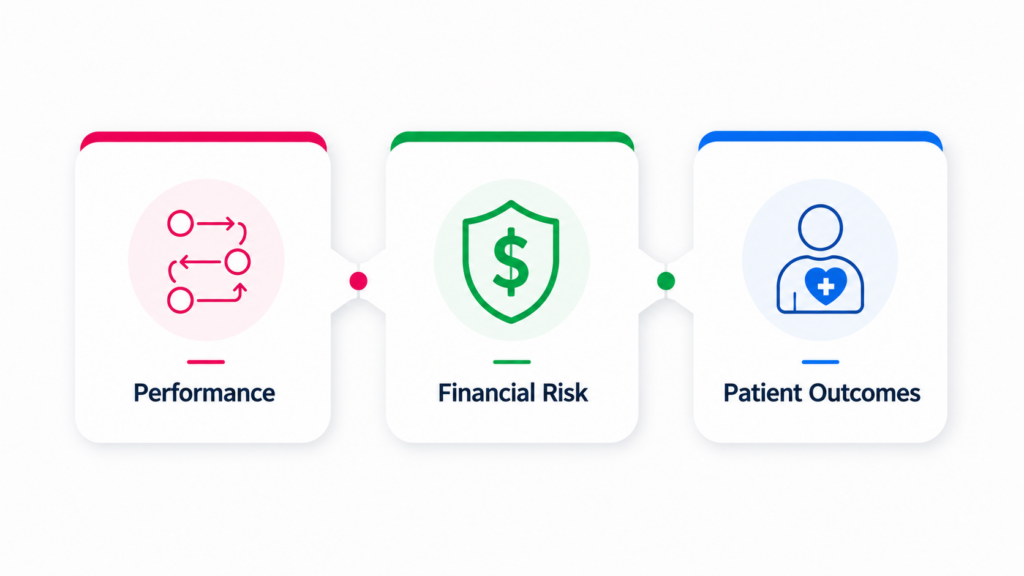
1. Performance and Efficiency
Administrative Burden: Research shows that “medical necessity” serves as a primary tool for allocating resources, but varying definitions across payers create administrative churn. Studies indicate that managing these requirements increases the revenue cycle workload, leading to delayed payments and reduced efficiency.
Operational Streamlining: Conversely, some evidence suggests that when medical necessity is effectively operationalized (e.g., integrated into EHRs), it can increase the speed of diagnosis by eliminating redundant or non-essential tests.
2. Financial and Compliance Risk
Denial Management: A major area of study involves “medical necessity” as a driver of claim denials. Research by organizations like AAPC indicates that failure to validate medical necessity can lead to revenue loss, recoupments, and payer audits.
Regulatory Exposure: Inadequate documentation of medical necessity is a leading cause of False Claims Act allegations, representing a high-stakes legal and compliance risk for health systems.
3. Patient Outcomes and Quality
Care Appropriateness: Studies suggest that medical necessity standards help align clinical care with evidence-based guidelines, which can improve patient safety by reducing exposure to unnecessary, potentially harmful procedures.
Equity and Access: Research into determinants of health system performance warns that restrictive criteria can limit access to essential care for vulnerable populations if based on cost-containment instead of individual patient needs.
Allege Longer Stays to Increase Medicare Reimbursement
The example covered here reflects some of these negative impacts. In this False Claims case, the DOJ alleges that the hospitals held patients in the hospital longer than medically necessary in order to increase Medicare reimbursement.
Long-term care hospitals (LTCHs) provide inpatient services for patients whose medically complex conditions require long hospital stays and programs of care. Medicare reimburses LTCHs based, in part, on a patient’s length of stay.
By allegedly delaying discharge of certain patients, even when their course of treatment had been completed or when they could have been transferred to a lower level of care, the hospital received higher payments than they should have.
The DOJ did not discover this issue on their own. The lawsuit was originally filed by a former employee of one of the hospitals through the qui tam or whistleblower provisions of the False Claims Act.
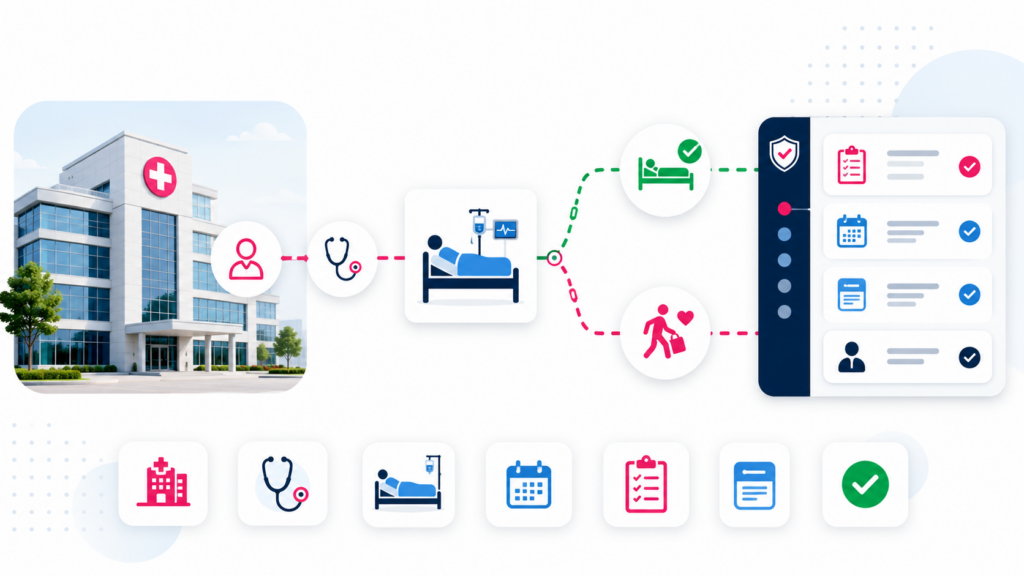
How Internal Concerns Become Full-Blown Investigations
Though allegations of medically unnecessary care may be a common reason such lawsuits are filed, understanding the details of a specific case is important.
It can help compliance professionals see how concerns, potentially first reported internally, can develop into full blown investigations or additional complaints being filed with the court by the DOJ, as in this example.
Manipulating Qualifying Patient Stays for Higher Reimbursement
In the complaint, the DOJ alleges that the defendants illegally inflated their Medicare payments by holding patients who were ready for discharge until they reached a certain threshold date that, once reached, would trigger increased reimbursement.
Certain Medicare patients who meet an average length of stay over the twenty-five days that LTCHs must maintain are referred to as a Qualifying Patient. The Government claimed the defendants also inappropriately held Qualifying Patients long enough to meet the 25-day average length of stay requirement to maintain their LTCH status and be paid at the higher LTCH rate.
In the court document filed by the DOJ, it’s alleged that one executive told her employees, “No one is leaving early. We lose money.” Unfortunately, this wasn’t the only example of their alleged poorly handled medical necessity determinations.
Ignored Alternatives Could Have Been Fraction of the Cost
According to the complaint, many of these patients could have been discharged earlier and received care at home or in a nursing facility for a fraction of the cost to Medicare.
The complaint also states that when employees raised concerns about the practices to one of its executives, the executive dismissed them, noting they would make money even if Medicare denied some medically unnecessary claims.
Compliance Responsible for Appropriate Processes
Compliance programs should ensure that appropriate processes exist to confirm the appropriate clinical criteria are met when it comes to admission and discharge actions. According to the government, LTCHs specifically must have a documented process that:
“screens patients prior to admission for appropriateness of admission to a long-term care hospital, validates within 48 hours of admission that patients meet admission criteria for long-term care hospitals, regularly evaluates patients throughout their stay for continuation of care in a long-term care hospital, and assesses the available discharge options when patients no longer meet such continued stay criteria.”
The government states that in 2017, CMS observed that LTCHs appeared to be improperly holding patients beyond the key time threshold to obtain the full payment, which resulted in potentially improper delays in patient discharges other than solely for medical reasons.
As a result, in fiscal year 2018, CMS revised the payment methodology to reduce LTCHs’ financial incentive to delay patient discharges until after the threshold.
Example of Inappropriate Intent to Maximize Revenue
The DOJ’s complaint contains statements that appear to imply they have emails or other documentation that show the intent to delay discharge. For example, an executive allegedly emailed a broad group of staff to praise them for getting “patients discharged on their correct discharge day to maximize our revenue.”
Reportedly, the same executive also developed a bonus plan for a case manager in 2018 that required her to discharge 90 percent of patients on the “ideal discharge date” to receive a bonus. The ideal discharge date was a date calculated in a way (and reported on a dashboard) to lengthen the stay to meet higher reimbursement goals.
Of course, the claims asserted in the complaint filed by the DOJ are allegations only. However, most of the time the DOJ is not going to file a complaint if they do not believe they have or will obtain the evidence they need to either pursue the case further in court or lead to a mutually agreed upon financial settlement.
Requirements for Medical Necessity Determinations
Medical necessity determinations tend to be circumstance-specific. Auditing and monitoring for medical necessity will also typically require the involvement of a professional with clinical training or background.
At times, it may be appropriate (if there are no conflicts of interest) to have a medical director from the organization be involved in such determinations. At other times, it may be a better idea to seek independent expertise from someone outside your organization.
Learn from Examples of Medical Necessity Problems
Watch for the next article in this series when we take another deep dive into an example of medical necessity in healthcare. In the meantime, browse these curated selections.
Find More Advice and Ideas in These Related Articles
- Introductory Article: Understanding Medical Necessity Compliance Risks The first post in this series, covering the foundational definitions and general compliance risks healthcare providers face today.
- The False Claims Act: A Guide for Healthcare Leaders A deeper look into how inadequate documentation can trigger False Claims Act allegations and the resulting legal stakes for health systems.
- Strategies for Reducing Claim Denials and Revenue Loss Practical insights into how medical necessity acts as a driver for claim denials and how to improve your revenue cycle workload.
- Aligning Clinical Care with Evidence-Based Guidelines Learn how to leverage medical necessity standards to improve patient safety and ensure care appropriateness across your organization.
CJ Wolf, MD, M.Ed. is a healthcare compliance professional with over 22 years of experience in healthcare economics, revenue cycle, coding, billing, and healthcare compliance. He has worked for Intermountain Healthcare, the University of Texas MD Anderson Cancer Center, the University of Texas System, an international medical device company and a healthcare compliance software start up. Currently, Dr. Wolf teaches and provides private healthcare compliance and coding consulting services as well as training.

Download our Latest Whitepaper

Sign-up for our Weekly Newsletter
Schedule a quick overview