
As compliance officers, we talk a lot about the factors that directly influence a culture of compliance in our organizations. Of course, things like tone-at-the-top and engaged leaders are some of the most prevalent and impactful. But we don’t spend nearly as much time on elements that affect compliance culture more indirectly.
Some of these indirect factors were highlighted during a December 2022 roundtable sponsored by the Massachusetts Health and Hospital Association (recapped in this YouCompli article). During the discussion, Timothy C. Hogan, senior vice president and chief compliance officer at Boston Children’s Hospital, advanced a theory that social determinants of health (i.e., non-medical factors that influence patients’ health outcomes) can influence compliance rates. These elements, which Hogan labeled “social determinants of compliance,” included workforce burnout, short-staffing, and upgrades to clinical data systems – factors mostly out of compliance officers’ control. Hogan later said that improving his organization’s compliance rates depended on being aware of and sensitive to the workload his colleagues already faced.
So, how can compliance officers identify and understand these social determinants of compliance? Also, how can they work with healthcare leaders to manage them and improve the organization’s overall compliance culture?
Know the Business Side of Your Organization
For any healthcare organization, there are two agendas: the compliance program agenda and the business agenda. Since the former is self-explanatory, let’s move on to the latter.
Generally speaking, the business agenda relates to the operational and financial goals of the organization. For example: what new service lines does the organization want to capture in its market? What does its patient volume look like? What is its payer mix? Are we competitive in the market in terms of patient care and attracting the right talent? These are just some of the aspects of a healthcare provider’s business agenda. The answers to these questions, and other aspects of a business agenda, represent the basis of most (if not all) of the decisions that healthcare leaders make every day.

So how do we better empathize with our healthcare leaders and learn the business side of your organization?
- Be curious. There are many questions that can help shed light on an organization’s business agenda, such as: where is the organization positioned in the market? Who are its business partners and competitors? How does it make money? How does it manage its finances? How does it recruit and retain staff? What is its employee turnover rate? How does each department carry out its processes?
- Observe discussions happening around you. In meetings, or the meeting after the meeting, pay attention to what’s being talked about related to the services your organization offers and what’s happening in the marketplace.
- Know how business decisions are made. For example, if you are working on an issue that has a financial component to it, your CEO likely will not make a decision unless the issue has been vetted first by the CFO.
By studying and learning the business side of your organization, you’ll be in a better position to help your organization’s leaders navigate their challenges. You’ll also naturally identify other potential social determinants of compliance that you may need to overcome.
Understand Your Leaders’ Perspectives
Another way to identify and measure social determinants of compliance is to understand your leaders’ particular point-of-view (POV). In other words, you need to think like a healthcare leader, not a compliance officer. Listen to what they tell you, and approach your work from their perspective, not yours. For example, if you are rehab department director, what operational goals do you have for the department? What obstacles or challenges do you face? What motivates you in the performance of your role? These are just some of the questions you need to be thinking about if you want to better understand your leaders’ POV.
By being aware of how your leaders think, you will uncover social determinants of compliance and understand their potential impact on the organization. You can then respond and assist accordingly, or remove barriers to successful compliance deliverables (e.g., completion of mandatory training).
Know Your Leaders’ Positions and Interests
Understanding a leader’s POV also means appreciating both their position on and interest in a topic or situation. Here’s a way to identify and distinguish them: a position is what a person says they want, while a person’s interest is the why behind whatever it is they say they want.
Let’s assume I’ve done an audit of medical necessity documentation for high-dollar imaging procedures like an MRI or CT scan. Let’s further assume that, after the audit, one of the recommended corrective action items is to conduct routine monitoring of how the imaging department documents medical necessity and billing for the procedures that were audited. Finally, let’s assume the imaging director’s name is “Sharon.”
If Sharon says to me, “We cannot conduct routine monitoring for these exams right now,” that is her position. If I asked Sharon why, she might say, “Because I am currently down five techs – three due to budget cuts and two others because of medical leave. I am stretched so thin as it is.” The fact that Sharon is short-staffed, and feeling like her staff cannot take on the additional work, is her interest. When it comes to empathizing with healthcare leaders and identifying social determinants of compliance, identifying interests will be valuable information to you.

Other examples of leadership interests may include budget limitations, software capability or capability challenges, and time—or lack thereof.
While positions are often communicated publicly, identifying interests may not be – so they can be more challenging to identify and understand. A leader may not publicly disclose his or her interest, either out of concern that it is viewed as an excuse or because he or she is managing communications on a confidential topic. That said, you could have an offline discussion with that leader, in case they are more comfortable speaking freely if they feel they won’t incur judgment from others.
It’s important to be mindful of the factors that directly affect your organization’s overall performance and compliance culture – as well as indirect ones like social determinants of compliance. With a complete set of input, you’ll be in a much better position to empathize with your leaders, help them navigate challenges and ensure all organizational compliance needs are met. Even better – you’ll probably deliver better patient care and health outcomes in the process.
Qualified compliance professionals do the heavy lifting for you, simplifying regulatory change management
Our in-house team works tirelessly to monitor US regulators, carefully read the regulations in their entirety, and translate the information into simple regulatory intelligence you can use. We deliver model procedures and expert tools that can be used to fulfill your business requirements. Everything is validated by a third-party law firm.

Get the latest from healthcare compliance experts
Never miss an article from Jay Anstine. Sign up for YouCompli’s weekly email if you haven’t already.
Jay Anstine
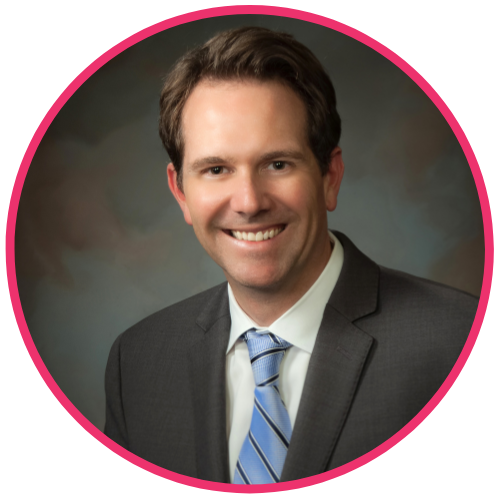
Jay Anstine is a compliance professional and consultant in Colorado. He is a healthcare lawyer with significant industry knowledge of the U.S. healthcare market. Over the past 20 years, he has worked for large for-profit and non-profit health systems and small physician-owned entities. In tackling the countless regulatory and operational issues for these diverse organization types, he has developed a deep understanding of the business of healthcare and the regulations governing the industry. In 2018, Jay became an adjunct faculty member with the University of Southern California Gould School of Law, designing and teaching healthcare compliance courses.
Jay obtained his law degree from the University of South Dakota, where he focused on healthcare law. From 2012-2016, he served on the Board of a non-profit organization serving the medically underserved in Colorado (ClinicNET). He is also a member of the Health Care Compliance Association (HCCA), serving on the planning committee for the Mountain Regional Conference since 2008.