
Revenue leakage from non-compliance with regulations exposes health systems to compliance risks and penalties. We’ve curated eleven resources to help compliance leaders be better prepared to guide alignment between regulatory compliance processes and revenue integrity goals.
Why Should Compliance Care about the Revenue Cycle?
Over half of all regulations deal directly with revenue cycle, billing and finance. Most providers still lack an effective system or process to monitor, assess, and validate compliance with those regulations. As a result, these organizations leave themselves open to significant risks, not to mention significant revenue leakage.
If you need to learn more about the revenue angle of healthcare compliance, these resources are a good place to start.
Compliance Content by Compliance Experts
The resources included in this collection Include articles from noted compliance experts including:
- Shawn Y. DeGroot – CHC-F, CCEP, CHRC, CCPC
- Maeve O’Neill, MEd – LPC-S, CHC, CDTLF
- Sharon Parsley – JD, MBA, CHC, CHRC
- Susan Thomas – CIA, CHC, CPC, CRMA
- Maya Turner – CPMA, CPCO, CFPC, CPC, CPC-I, AAPC
- CJ Wolf – MD, CPC, CPC-I, M.Ed.
Learn from their advice and examples how compliance contributes to revenue performance and launch your own strategies for improvement.
1. Blog – Mitigating Conflicts of Interest that Drive Profit Over Health
Integrity First: Mitigating Conflicts of Interest in Clinical Decision-Making

In healthcare, a conflict of interest (COI) occurs when secondary interests, such as financial ties or institutional goals, threaten to compromise clinical objectivity.
These conflicts do more than just create ethical dilemmas; they often lead to overutilization of unnecessary tests and treatments, inflating costs for patients and insurers alike. For compliance leaders, addressing COIs is essential to protecting the integrity of the healthcare system and ensuring resources are used appropriately.
This blog examines the ripple effects of COIs on both patients and providers. It discusses key components of these conflicts and the significant financial impact they have on the entire healthcare ecosystem.
Inside this resource:
- Identifying the Triggers: Learn to recognize the financial ties and personal relationships that can bias medical decision-making.
- The Cost of Overutilization: Understand how unnecessary procedures create financial burdens and exploit the system for gain.
- Systemic Impact: Explore the broader consequences of COIs, including their role in fraudulent billings.
- Protecting Objectivity: Strategies for ensuring that clinical judgment remains aligned with the best interests of patients and public health.
Don’t let hidden interests drive your organization’s clinical path. Read the full blog to learn how to identify and mitigate the conflicts that put your system at risk.
2. Blog – How to Avoid False Claims Related to Medical Necessity

Protecting the Bottom Line: Compliance as a Revenue Safeguard
In the complex world of health system finance, a single coding error can quickly escalate into a multi-million-dollar False Claims Act liability. While Revenue Cycle Management (RCM) focuses on speed and volume, Revenue Integrity ensures that those gains aren’t lost to federal audits or recoupments.
For compliance leaders, the “false claims” conversation can mean the difference between a profitable year and a catastrophic settlement.
This resource explores the intersection of regulatory oversight and financial performance. We dive into the specific strategies compliance leaders can use to identify high-risk billing patterns before they trigger a government investigation.
What You’ll Learn:
- The true cost of “low-effort” billing: Why speed should never compromise clinical documentation.
- Bridging the gap: How to align RCM teams with compliance protocols to create a unified front.
- Audit-proofing your revenue: Proactive measures that turn compliance from a cost center into a financial protector.
Stop treating compliance and revenue as separate silos. Discover how a robust integrity program acts as the ultimate insurance policy for your organization’s financial future.
3. White Paper – Exploring the Four Hot Spots Of the Healthcare Revenue Cycle

Navigating the Minefield: Mastering the Four Hot Spots of Revenue Integrity
The healthcare revenue cycle is the financial lifeblood of your organization, but it’s also a landscape filled with hidden regulatory traps. With complexity in payer contracts and government oversight, certain areas have evolved into high-risk “hot spots” that demand immediate, expert compliance scrutiny.
This featured white paper provides a strategic roadmap for compliance leaders to identify and manage these critical zones. We go beyond surface-level billing to explore how internal scrutiny can protect your organization from significant regulatory challenges while simultaneously optimizing your reimbursement potential.
Inside this guide:
- The Danger Zones Identified: Learn about four specific areas within the revenue cycle currently under the greatest regulatory microscope.
- Sustainability Through Scrutiny: Discover how proactive internal reviews can turn compliance risks into opportunities for improved financial health.
- Strategic Optimization: Move past simple oversight and explore actionable strategies to ensure your revenue cycle is both compliant and high performing.
Stop letting the complexity of modern regulations put your organization’s revenue at risk. Download this essential resource to master the hot spots of revenue integrity and safeguard your system’s financial future.
4. Case Study – Getting It Right: Minimizing Self-identified Overpayments & Maximizing Accurate Billing

From Regulatory Burden to $400,000 in Savings: The Great River Health Story
For a small compliance team, staying ahead of complex state coding rules and rapid federal updates is often a losing battle. At Great River Health, this challenge meant spending countless hours manually interpreting regulations, yet the team never felt fully confident that they were catching every risk. They needed a way to move away from constant research and toward decisive action.
This featured case study explains how Great River Health transformed their compliance program from a source of stress into a vital engine for revenue integrity. By adopting a system that provides validated policy templates and expert regulatory analysis, they shifted their focus from interpretation to implementation.
Inside this success story:
Proven Financial Results: See how the organization reduced self-identified overpayments by over $400,000 in just one year.
Efficiency at Scale: Discover how automated tools allow small teams to handle a high volume of complex requirements with total confidence.
The “Peace of Mind” Factor: Read how the Chief Compliance Officer went from stressing about regulatory fears to having total confidence in the system.
Stop letting manual tracking put your organization’s revenue at risk. Download the full case study to see how your team can achieve similar results in revenue integrity.
5. Blog – Healthcare Compliance is Everybody’s Business: Clinical, Revenue Cycle, IT, Sales and Marketing
Breaking the Silos: Why Compliance is Everybody’s Business
To ensure long-term stability, compliance leaders must lead the charge in fostering deep partnerships with clinical, IT, and revenue cycle teams. Compliance can no longer operate in isolation. As governmental and commercial payers deploy increasingly sophisticated programs, the only way to safeguard your organization is through a unified front.
This blog explores the strategic necessity of internal alliances. It breaks down the specific skills and communication rhythms required to identify systemic risks and avoid the catastrophic penalties associated with “reverse false claims” liability.
Inside this resource:
- The Partnership Mandate: Why a strong relationship with your revenue cycle team is your first line of defense against advanced payer audits.
- Beyond the Surface: Learn how to distinguish between coding-specific denials and medical necessity issues to uncover localized and systemic vulnerabilities.
- The 60-Day Clock: Understand the critical risks of “reverse false claims” and how to manage the return of overpayments to avoid treble damages.
- Proactive Governance: How to establish regular cross-departmental meetings that turn compliance from a reactive task into a shared culture of integrity.
Stop letting departmental silos become a regulatory liability. Read the full blog to learn how to turn every team into a partner for revenue integrity.
6. Blog – Uncovering $9 Million in Unbilled Services
The $9 Million Question: How Mock Audits Uncover Hidden Revenue
Most compliance professionals view mock audits as a shield against fines and regulatory scrutiny. However, when approached strategically, these audits can also act as a powerful engine for revenue integrity. In one striking example, a fresh set of eyes and a few “tough questions” led to the discovery of $9 million in unbilled services.
This featured blog explores how mock audits do more than just manage risk. They’re a primary tool for building cross-departmental relationships and positioning the compliance team as a high-value partner to the rest of the organization.
Inside this success story:
- The “Fresh Eyes” Advantage: Why stepping away from day-to-day tasks to look at the bigger picture is essential for identifying systemic billing gaps.
- Beyond Revenue Protection: Discover the five strategic benefits of audits, from shaping organizational culture to preventing future penalties.
- The Power of Simple Questions: See how asking “Do we bill that?” can lead to the biggest dollar-value discoveries of your career.
- Compliance as a Partner: How to use the audit process to build trust and influence across the business while delivering tangible financial value.
Stop viewing audits as a burden and start seeing them as an opportunity to prove the financial impact of your compliance program. Read the full story here to learn how to turn your next mock audit into a multi-million-dollar win.
7. Blog – Compliance Risks Associated with Outlier Payments
The Chargemaster Trap: Managing the High Stakes of Outlier Payments
The next resource in our collection focuses on a high-stakes area of reimbursement that often flies under the radar until an audit begins — outlier payments.
Outlier payments are designed to protect hospitals from significant financial losses on exceptionally costly cases. However, because these supplemental payments are directly tied to hospital charges, they have become a primary target for regulatory scrutiny. If a facility raises its chargemaster prices without clear justification, it can artificially inflate these payments and trigger intense external audits.
This blog explores the delicate balance between revenue protection and compliance risk. We examine real-world audit findings where simple human errors and system glitches led to hundreds of thousands of dollars in overpayments and potential penalties.
Inside this resource:
- The Scrutiny Factor: Understand why enforcement agencies are actively monitoring price increases that lead to spikes in outlier reimbursement.
- Lessons from the Field: Review the 2020 OIG audit of an Arkansas facility that found over $580,000 in overpayments due to time-tracking and coding errors.
- The Human Error Risk: Learn how “hardcoded” charges and misaligned supply items can create systemic billing inaccuracies that go undetected for years.
- Strategic Collaboration: Discover why a close partnership between compliance, finance and reimbursement teams is the only way to safeguard your organization against these risks.
Stop letting unjustified price adjustments put your hospital at risk for recoupment and penalties. Read the full blog here to learn how to proactively audit your outlier claims and maintain regulatory integrity.
8. Blog – The Cost of Non-Compliance
Beyond the Fine: Calculating the True Price of Non-Compliance
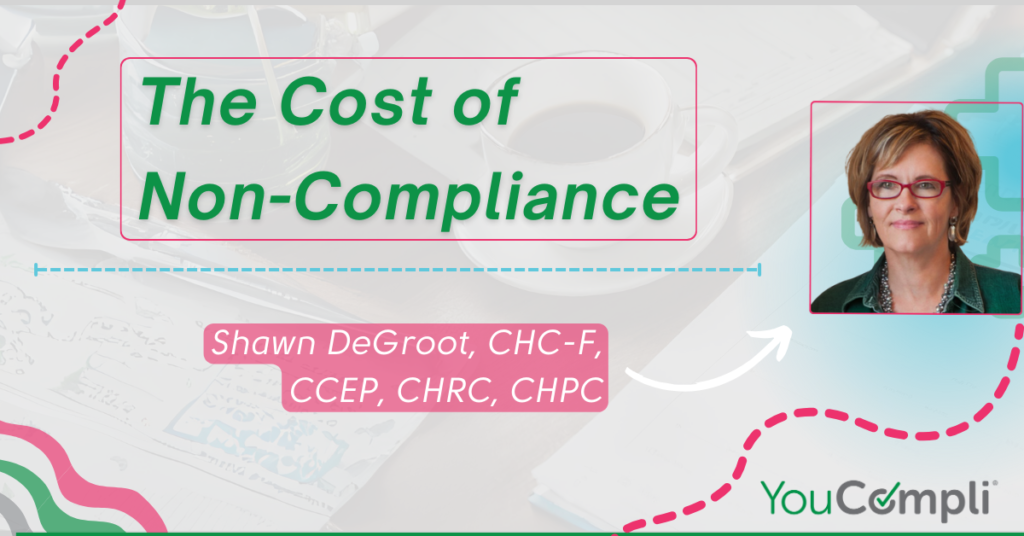
In the budgeting process, the cost of non-compliance is often a forgotten line item until it becomes a hard reality. While hefty fines for HIPAA or Medicare violations are the most visible risks, they’re only the beginning.
For healthcare organizations, the true cost includes a cascade of legal fees, operational disruptions and long-term reputational damage that can be difficult to quantify but impossible to ignore.
This piece explores how to move beyond reactive firefighting and toward a model of operational excellence. We discuss how to use Corporate Integrity Agreements (CIAs) as a powerful benchmarking tool to identify systemic vulnerabilities before they lead to federal intervention.
Inside this resource:
- The Tangible and Intangible: Learn how to communicate the full spectrum of risk to your board, from immediate settlement costs to the lasting impact on patient trust.
- Contract Integrity: Focus on the critical importance of auditing physician and medical director contracts to prevent Stark Act and Anti-Kickback Statute violations.
- A Culture of Excellence: Understand why investing in compliance is not just a legal obligation but a cornerstone of your organization’s commitment to patient care and operational stability.
Stop viewing compliance as a cost center. Read the full blog to learn how a proactive approach to auditing and monitoring can safeguard your organization’s future.
9. Blog – How to Avoid Compliance Risk in Peripheral Vascular Reimbursement
Under the Microscope: Navigating Peripheral Vascular Reimbursement Risks
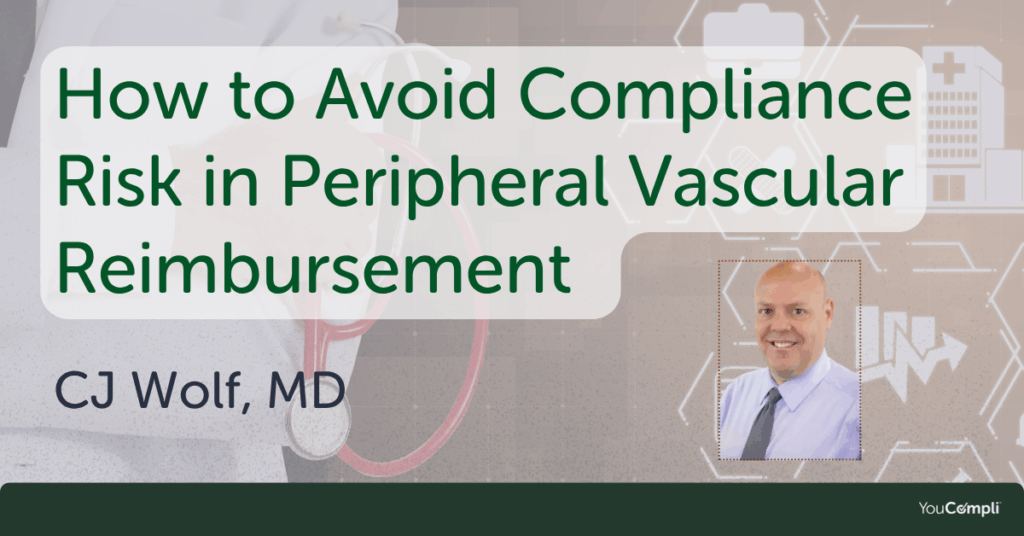
Peripheral vascular disease (PVD) reimbursement has become a lightning rod for regulatory scrutiny. With alarming statistics regarding improper payments and a surge in whistleblower investigations, health systems cannot afford to treat these interventions as routine billing.
For compliance leaders, the challenge lies in ensuring that every procedure meets stringent medical necessity guidelines before a claim is ever submitted.
This expert-led blog provides a deep dive into the regulatory trends and enforcement patterns currently shaping the vascular space. It provides technical insights and best practices your team needs to safeguard your organization’s reputation and financial stability.
Inside this resource:
- Medicare Compliance Mastery: Understand the specific documentation and coding requirements that federal auditors target in vascular interventions.
- Fraud Warning Signs: Learn why high volumes in vascular reimbursement are triggering red flags for the OIG and how to stay ahead of these investigations.
- Recent Investigation Insights: Review lessons learned from recent whistleblower cases that focused specifically on PVD compliance failures.
- Best Practices for Integrity: Actionable strategies to align clinical documentation with reimbursement guidelines to ensure every claim is defensible.
Stop letting PVD reimbursement become a vulnerability in your revenue cycle. Read the full blog here to equip your team with the knowledge to navigate this complex environment.
10. Blog and Tip Sheet – Revenue Cycle Management Compliance: Ensuring Financial Health in Healthcare
Financial Integrity: Mastering Revenue Cycle Management Compliance
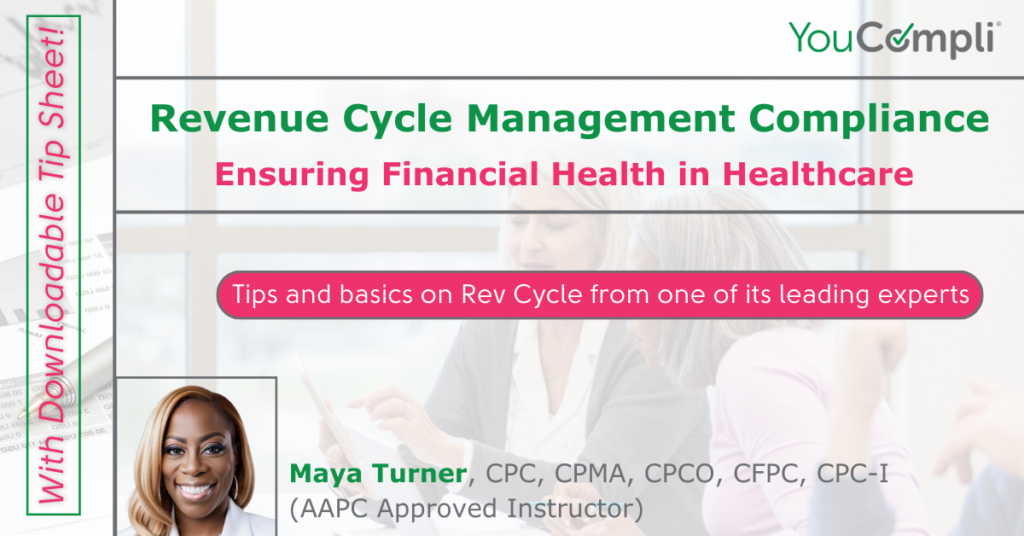
Revenue Cycle Management (RCM) is the essential financial engine of any healthcare provider, managing everything from claims processing to final payment.
However, the efficiency of this cycle depends entirely on its alignment with regulatory standards. Without a foundation of strict compliance, even the most streamlined revenue process is at risk of legal repercussions and compromised financial integrity.
This blog and tip sheet provide a comprehensive look at best practices required to maintain a healthy revenue cycle. It explores the importance of being proactive in your compliance efforts to ensure that your organization’s financial health remains as robust as its patient care.
Inside this resource:
- Defining the Mission: Gain a clear understanding of how RCM integrates administrative and clinical functions to drive timely payments.
- The Compliance Mandate: Discover why active compliance is the key factor in protecting your revenue integrity from inadvertent compromise.
- Overcoming Challenges: Learn about the four main types of obstacles organizations face when aiming for total revenue cycle compliance.
- Strategic Importance: Explore the key factors that make compliance an indispensable part of successful revenue management.
Stop viewing revenue and compliance as competing interests. Read the full blog and tip sheet to discover how to turn regulatory adherence into your greatest financial safeguard.
11. Blog and Tip Sheet – Three Strategies to Align Compliance with Revenue Cycle
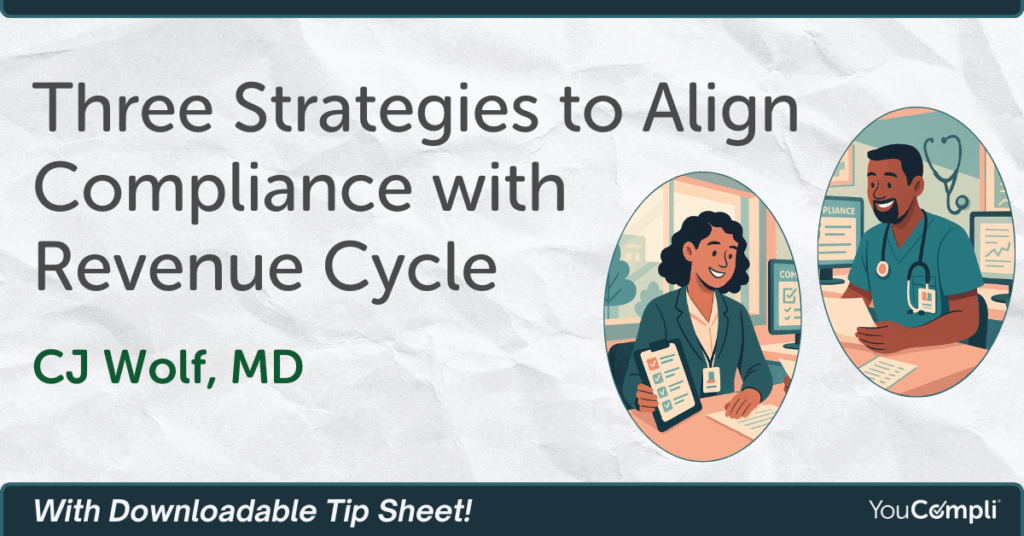
Strategic Synergy: Bridging the Gap Between Compliance and Revenue Cycle
For healthcare organizations, the revenue cycle is the financial lifeblood. However, when compliance and revenue cycle management operate in silos, the resulting friction creates significant regulatory and financial risks.
To protect the bottom line and ensure long-term sustainability, compliance leaders must lead the charge in aligning these two critical functions.
These resources provide a roadmap for this essential partnership. We break down actionable strategies to move beyond simple oversight and toward a collaborative model that proactively identifies and mitigates risks before they impact your organization’s health.
Inside this resource:
- The Power of Collaboration: Learn how regular interaction between teams fosters a culture of shared responsibility and leads to more fruitful outcomes.
- Audit for Impact: Discover why proactive claims auditing is your best defense against government scrutiny and potential recoupments.
- Targeted Education: See how role-specific training ensures that every member of the revenue cycle team is equipped to safeguard your system’s integrity.
Stop letting a lack of alignment become a financial liability. Explore how these three strategies can transform your compliance program into a vital partner for revenue integrity.
Still have some questions about working with revenue cycle management? Reach out to schedule a consult and learn how we help compliance leaders with this challenge.
This clip is a must-watch for compliance professionals looking to reduce risk, save time, and ensure accuracy.
Take Free RL3M Assessment (Regulatory Lifecycle Management Maturity Model)
Download our Latest Whitepaper

Sign-up for our Weekly Newsletter
Qualified compliance professionals do the heavy lifting for you, simplifying regulatory change management