
How providers stay in compliance as demand for telehealth surges. How healthcare providers are preparing for the regulatory changes that will come with the end of the public health emergency.
Continue reading
How providers stay in compliance as demand for telehealth surges. How healthcare providers are preparing for the regulatory changes that will come with the end of the public health emergency.
Continue readingFeatured speakers: Craig Bennett, Vice President and Chief Compliance Officer, Boston Medical Center; Rachel Lerner, Esq., General Counsel & Chief Compliance Officer, Director, Center for the Prevention of Elder Abuse and Neglect, Hebrew SeniorLife; Maria Palumbo, Chief Compliance & Privacy Officer, Lawrence General Hospital. Moderated by Larry Vernaglia
Bennett, Lerner and Palumbo addressed the Massachusetts Health and Hospital Association’s Healthcare Legal Compliance Forum in December 2021. (Read a summary.) This recap of their remarks looks at how their Compliance teams responded to COVID and have continued to partner with their organizations to manage regulatory change. It also looks at regulatory changes they are planning for in 2022. To access the full session recording, please contact the Massachusetts Health and Hospital Association.
The panel reflected on their organizations’ initial response to COVID. “All of us had to pivot on a dime,” said Bennett. “We hadn’t had an opportunity to plan for it. Instead, we worked daily that first quarter to make sure we were as compliant as we could possibly be.” He was part of a team that looked at various waivers, platform security, privacy and other issues affected by the public health emergency to provide care safely.
Lerner had a similar experience. “We immediately convened interdisciplinary committee so we could make changes quickly. Telehealth was really new territory for us, and we had to look at our outpatient medical practice, and home- and community-based care,” she said. “Tracking COVID 19 waivers was a team sport between Legal and Compliance. We broke down some silos, and that may be one good lasting benefit of this experience.”
Palumbo and her colleagues focused on creating templates and consistency for documentation to make things as straightforward as possible for clinicians. That included having them track their patient contact time in minutes rather than defaulting to 20-minute increments. “We’re auditing these processes now to be sure we’re prepared when it gets looked at externally.”
Palumbo illustrated how healthcare organizations had to respond to the specific needs of their communities. “Our population tends not to have computers or printers at home,” she said. It wasn’t enough to deliver COVID test results to the portal, because people needed printed results to return to work or school. Without a printer, they were stuck. “We were like the take-out line at a restaurant – we not only have to contract with the state to provide nine-lane testing, we also have a multiline drive up for picking up your covid test results because people need that hard paper.”
Bennett reflected on the tremendous amount of change and adaptation healthcare staff managed over the past two years. “I have to commend all hospital staff in being able to pivot and not missing a beat,” he said. His organization paused or reprioritized certain issues, but they maintained a focus on complying with regulations. That meant checking in with people regularly. That helped him assess whether people were getting the support and resources they needed related to their work. He expects to continue looking for ways to support staff. “We’ll continue to try to add flexibility to meet the needs of our staff and the needs of our patients and organization.”
Palumbo, too, is working to meet people where they are at. She recently “camped out in the cafeteria,” she said. “I couldn’t believe the results: About 350 people came to talk to me, including residents, physicians, surgeons, nurses, case managers, and housekeeping staff.” They asked about patient privacy and other compliance issues. “So much came up during COVID but we didn’t stop to work through everything or stop to talk to each other. I’ll try to do that at least once a quarter.”
Palumbo walked through some upcoming regulatory changes she’s watching. This included the Medicare Final Physician Fee Schedule and noted that the Appropriate Use Criteria changes are delayed until the January first that follows the end of the pandemic. She encouraged everyone to understand the documentation requirements for using nurse practitioners for some portion of care as well as the changes to billing for surgeon and ICU provider time.
New rules also allow audio-only telehealth visits for behavioral health as long as the patient wants it and the physician documents it properly.
Lerner continues to address privacy concerns related to COVID testing and contact tracing. “We were working so hard to limit the spread of the disease in our senior living facilities,” she said. “It was hard to navigate contact tracing and privacy.” Now she is addressing cybersecurity insurance requirements, for her own organization and making sure vendors have sufficient insurance. “Moving to remote workforces and telehealth, the cybersecurity exposure is higher than it’s ever been,” she said. “For instance, people working from home might want to print documents, but we have to keep them from printing PHI at home or mailing things insecurely when someone can’t come pick it up.”
Lerner said she spends a lot of time looking at regulatory changes to understand their implications to her organization. “It can take us a long time to decide ‘does this apply to us?’ And then figure out what to do with it. Then we have to figure out what to do with that information in bits and pieces. It is certainly a complex, ever-changing universe on that front.” She spoke of Compliance’s key role in knitting together all that information to help the organization act on it and integrate it into daily processes.
YouCompli sponsored MHA’s 2021 Healthcare Legal Compliance Forum. We provide a complete solution to help healthcare compliance organizations manage regulatory change. Find out more about YouCompli.


Protect hospital revenues and build patient trust with effective compliance to the No Surprises Act federal requirements. Revise procedures related to out-of-network providers.
Continue readingLearn how training, education and communication of No Surprises Act regulations helps you roll out a smooth implementation and build a culture of compliance.
Continue readingInformation Blocking Rule works with HIPAA’s regulatory “right of access” provisions. Patients should have access to their health information.
Continue reading
Information-blocking compliance perpetually changes. Learn how to build a compliance culture across IT, HIM, privacy, legal, medical, and nursing.
Continue readingFor value-based care, avoiding information-blocking isn’t enough
Continue readingPatients and providers alike flocked to telehealth in 2020. Before the COVID-19 pandemic began, fewer than one percent of Medicare primary care visits (PCV) were conducted via telehealth. By April 2020 that number had risen to 43 percent. (See the data.)
This spike was in response to fear of spreading the virus, of course. But it was only possible because healthcare organizations worked so hard to adjust to meet the ongoing patient needs. The federal government helped by announcing a public health emergency that eased key rules.
Related: Differing state regulations make telehealth compliance more complex.
Compliance professionals worked across their organizations to make sure that everyone understood and complied with documentation, coding and confidentiality requirements. For example, compliance professionals collaborated with clinical teams to ensure telehealth workflows were HIPAA compliant. And, given the potential for abuse and scrutiny, providers who bill Medicare/CMS took extra care to document visits properly.
Telehealth has been hugely popular with patients and has led to better visit compliance, particularly for uninsured and underinsured populations. Telehealth has improved patient care by allowing convenient appointments from the comfort of home via a smartphone, tablet, or computer. Another benefit is that telehealth has the potential to expand health care access to underserved populations by eliminating traditional barriers to care such as transportation needs, distance from specialty providers, and approved time off from work. These visits were essential for patients with limited mobility. And of course, there’s the most immediate and urgent benefit of telehealth: reducing the spread of COVID-19 by limiting person-to person-contact.
The work for the Compliance team and colleagues across the organization was significant. They had to determine how to maintain confidentiality, obtain consent, and determine proper billing codes. Despite the enormity of this task, the effort seems to be worth it. Patients are reporting that telehealth helps them take better care of themselves. According to Medical Economics:
Providers seem to feel that they have worked through a lot of the challenges of telehealth compliance, especially when internet connections are stable. Nicole Craig is a Family Nurse Practitioner at Children’s Rehabilitative Services in Phoenix. She says compliance guidance helps providers “know what has to be documented in the chart to protect ourselves from things such as improper billing and coding.” And, “in 2021 the billing is now different. Getting help from Compliance allows providers to bill time-based care. We have to understand the billing rules and compliance factors in order to follow them, especially during telehealth visits.”
For most PCVs, telehealth proved to be an efficient way to provide care. This method limited in-person visits to those instances where the patient needed a hands-on physical assessment or diagnostic testing.
Isabella Porter, JD, director of Compliance at District Medical Group, Inc., is confident that 2020 created a rebirth of telehealth. She also sees a new appreciation of this method of care delivery which healthcare will not abandon once the pandemic is deemed “over.” And she knows that her team will be a big part of her organization’s success. “I do believe that in the context of telemedicine during COVID-19, our Compliance department’s assistance with telehealth workflows lead to overall better patient outcomes during the pandemic,” she said.
It’s a good thing. While concern about the coronavirus will recede, providers and patients alike will want to continue some telehealth visits. Healthcare leaders will work collaboratively to ensure their organizations can continue to offer this important option.
Keep on top of regulations affecting telehealth and make sure those regulations are translated into policies and procedures that affect patient care. YouCompli customers have access to notifications about changes to regulations, resources to inform policy and procedure updates, and tools to track compliance. Contact us today to learn more.
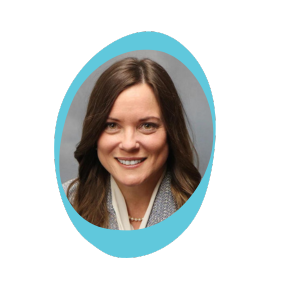
Denise Atwood, RN, JD, CPHRM has over 30 years of healthcare experience in compliance, risk management, quality, and clinical areas. She is also a published author and educator on risk, compliance, medical-legal and ethics issues. She is currently the Chief Risk Officer and Associate General Counsel at a nonprofit, multispecialty provider group in Phoenix, Arizona and Vice President of the company’s self-insurance captive.
Denise Atwood, RN, JD, CPHRM
District Medical Group (DMG), Inc., Chief Risk Officer and Denise Atwood, PLLC
Disclaimer: The opinions expressed in this article or blog are the author’s and do not represent the opinions of DMG.
Telehealth is almost as old as the telephone itself. In 1879 – just three years after Bell patented the telephone – an article in Lancet described the concept and advocated its adoption.
A law that’s even older can trigger many telehealth audits today. The 1863 False Claims Act (FCA) was enacted to keep profiteering contractors from defrauding the Union army. It can trigger serious problems for hospitals that don’t take proactive steps to make sure their telehealth practices are audit-proof.
That’s because the 2010 Affordable Care Act updated the FCA to make healthcare providers liable for “retention of any overpayments” from Medicare and Medicaid. This even includes overpayments resulting from accident or error. Indexing penalties for inflation each year, a requirement added in 2015, increased hospital liabilities. This puts liabilities at three times the amount of the overpayment(s) plus $11,803 to $23,607 for each instance. (Some 29 states and the District of Columbia have additional False Claim laws.)
These laws’ implications and requirements touch every part of the hospital. Keeping the whole organization in compliance means that all departments have to work together.
Even before COVID, the government audited claims from what was then a smaller, rural telehealth system. Regulators found a trend of incorrect payments to doctors outside rural areas, who were therefore ineligible to receive them.
Telehealth is on the latest Office of the Inspector General (OIG) work plan, too. The OIG will be addressing remote patient monitoring by telehealth as an area of concern.
The public health emergency, with its series of 90-day waivers, made it possible for telehealth to grow so fast. Now, as the COVID emergency ebbs, Congress is considering making its current, expanded status permanent. (Two bills were introduced in May. One would enable audio-only telehealth services for Medicare enrollee. The other would expand telehealth for Medicaid and Children’s Health Insurance Programs.)
That’s good. But with laws come regulations covering acceptable types, locations and forms of delivery of telehealth services. And with regulations come scrutiny and audits. That can create challenges, especially with the specter of FCA liability in the background.
The best way to cope with audits is to prevent the need for them in the first place. Here are six steps to follow:
Patient demand for telehealth isn’t going away. Neither are the costs of noncompliance with telehealth regulations. As the public health emergency expires, fines from regulators and denial of claims from payers are sure to add up. The best way for your healthcare organization to solve these potentially massive financial problems is to work together to prevent them. Proactively partnering with colleagues in all relevant departments, your compliance team can lead the efforts to identify and fix issues before they become major problems. That way, you’ll be able to provide the telehealth services patients want in compliance with what the regulations demand.
It’s a big effort to keep your compliance champions connected and communicating. See how YouCompli can help you manage the rollout of new regulations and verify best efforts to regulators and your board. YouCompli is the only healthcare compliance software combining actionable regulatory analysis with a simple SaaS workflow.