
In this article, Lisa Estrada shares her perspectives on why systems beat heroes in compliance and how AI can help accelerate systems thinking in fast-paced healthcare environments.
Lisa is a seasoned compliance executive with more than 25 years in healthcare, including serving as Chief Compliance Officer for several large, national health systems. See more of her impressive credentials at the end of this blog.
Systems Beat Heroes: The Quiet Advantage in Compliance
Ever notice how organizations love a hero story? The person who swoops in, tackles the problem, and saves the day. For the individual, there’s the rush of feeling impactful and the shout-out at the team meeting. For the organization, the crisis is averted, allowing it to direct resources to other pressing challenges. That is, until the next crisis pops up.
This hero-driven culture is the norm in the healthcare systems where I’ve worked. And as a compliance leader, I’ve fallen into the trap of believing that a key way to establish the value proposition for the compliance function is to show up as the hero, avert the crisis and bask in the glow of the company-wide shout out.
The Alternative to Hero-driven Compliance Culture
But is assimilating into the hero-driven culture the right strategy for a compliance program?
I’ve had a chance recently to think about this question in a very personal way. Since leaving behind my life as a senior legal and compliance executive at large health care systems, I’ve started providing interim compliance leadership services to small health care organizations — standalone hospitals, small systems, and health tech start-ups.
I’m often a one-woman show writing on a blank or nearly blank slate. And on a near-daily basis, I face a choice between swooping in, tackling a problem and saving the day or stepping back, thinking holistically and building systems that will minimize the need for heroes longer term.
Given that my role as an interim is short-lived by design, the choice is obvious — build systems that will help the organization navigate through compliance challenges long after my engagement ends. Even so, it can be a challenge to quell my inner hero — to focus on the complex and time-consuming task of building systems while forgoing the quick gratification of popping out an answer or a quick fix.
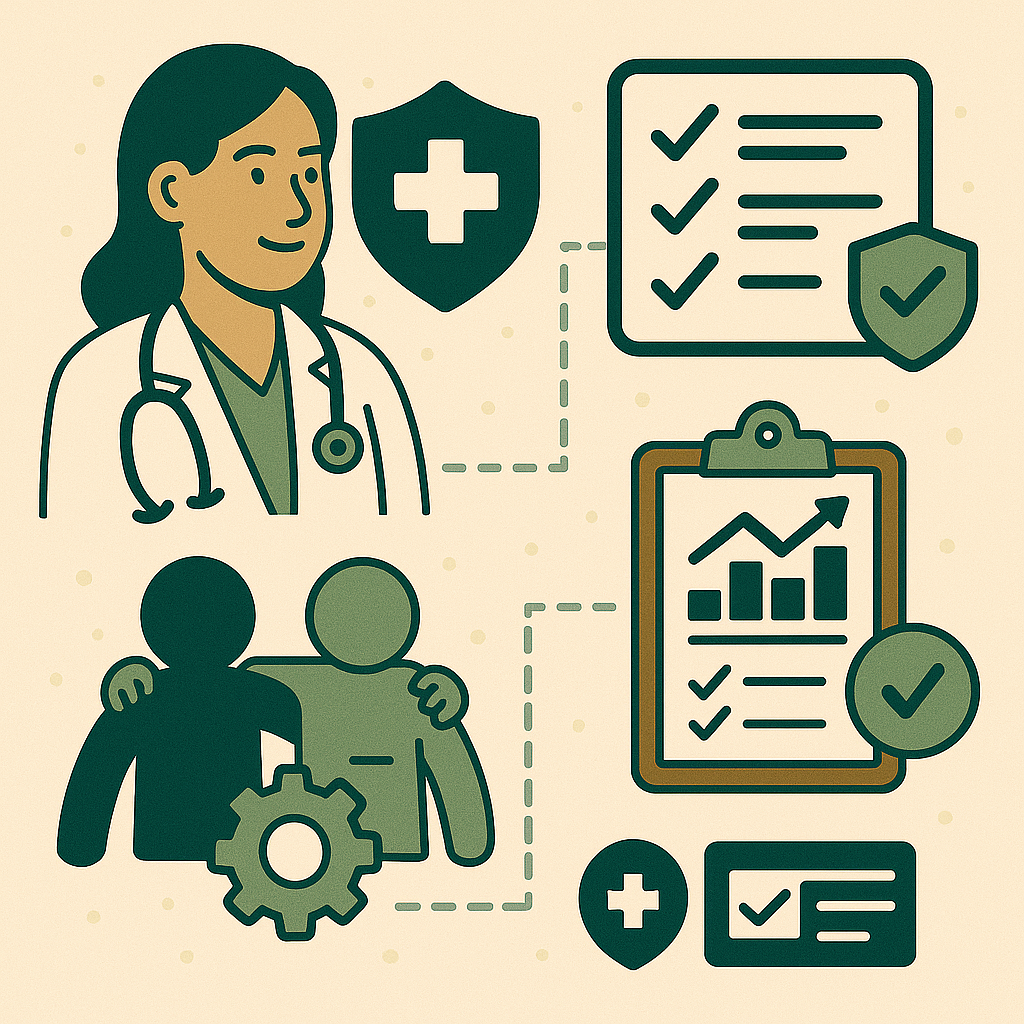
Experiencing this tension has really highlighted for me how building strong systems is the counterbalance to playing the hero. And that, ultimately, building an effective compliance program requires prioritizing systems over heroes.
What Is “Systems Thinking” in Compliance?
Systems thinking views compliance as an interconnected web of people, processes and technology. This approach builds resilient workflows that deliver consistent results, no matter who’s on point.
Why Systems Beat Heroes
- Consistency: A system runs the same way every time, reducing risk and variability.
- Scalability: Growth doesn’t depend on hiring more “unicorns.”
- Resilience: When someone leaves, the process doesn’t fall apart.
- Defensibility: Audit trails and documentation demonstrate effectiveness.

What Systems Can’t Do
Systems can’t do everything; they don’t obviate the need for judgment. Instead, they help pinpoint exactly where judgment is needed. In other words, systems can take care of routine and predictable aspects of compliance work, allowing the compliance team to focus their expertise on those unique or complex scenarios that need thoughtful decision-making and judgment calls.
Moving from Heroics and Reactivity to Systems Steadiness
The shift from heroics to systems thinking requires a move away from reactivity. In a reactive mode, attention is naturally drawn to individual problems that are urgent, visible and immediately solvable. The focus on immediate fixes makes it harder to step back slow and zoom out enough to see the larger patterns at play. This is a perfect description for most (if not all) corporate environments I’ve experienced.
Systems thinking, on the other hand, involves creating the space to recognize how the system as a whole shapes recurring issues. Instead of focusing narrowly on the problem, it involves zooming out and asking questions like:
- What pressures, structures or gaps made this outcome likely?
- What yellow or red flags are we missing until something breaks?
- What incentives are unintentionally rewarding risky behavior?
Systems thinking can also mean building playbooks, decision rules and feedback loops for frequently arising compliance issues.
How Can AI Help with Systems Thinking in Healthcare Compliance?
In the real world, compliance leaders are often required to react to urgent issues. The question then becomes how best to toggle back and forth between reactivity and systems thinking. One tool for facilitating this balance is an AI assistant. I’ve found that AI can help create that crucial space to step back and see the system as a whole, while still allowing me to toggle back to reactivity when needed.
In my work, I have come to rely heavily on AI as a thought partner – helping me to extract and organize my knowledge and experience into repeatable, shareable protocols customized to a particular organization’s needs.
Three Examples of AI as Systems Thinking Partner
Here are three specific examples of how I have used AI as a systems thinking partner for compliance programs:
1. Structured Knowledge Extraction
This works one of two ways for me. Sometimes I do a brain dump, sharing with my AI assistant my thoughts on
- What I’m trying to achieve
- What I’ve seen work or fail in the past
- What challenges I anticipate
Other times, I ask my AI assistant to interview me about the problem and possible solutions. Both paths yield a structured outline, allowing me to translate my judgment and approach into clear steps.

2. Turning Steps into Repeatable Workflows
Once my AI assistant has my knowledge in a structured form, the next steps are
- Creating standardized workflows
- Identifying decision points and criteria
- Capturing it all in a playbook to hand off to others with plain language instructions, checklists and templates
3. Continuous Improvement through Continuous Feedback
Good systems are designed to improve over time. They are structured enough to create consistency and clarity, but flexible enough to absorb real-world experience from the people who use them.
AI can support this by helping surface patterns, friction points, and recurring questions that emerge as the protocol is used day to day. This facilitates a continuous feedback loop in which protocols can be regularly refined to better reflect how work actually happens.
The Takeaway: A Fresh Way of Viewing Compliance Effectiveness
What I’m advocating for here is a different way of thinking about effectiveness in compliance. Being the person who can step in, solve the problem, and keep things moving can feel like success — and in the short term, it often is. But over time, that pattern can hide deeper system weaknesses and make organizations overly dependent on individual heroics.
Systems thinking offers a quieter alternative. It invests in structures that make good outcomes more likely without constant intervention. When systems are doing their job, judgment doesn’t disappear — it gets used more intentionally in the situations that truly require it.
I’ve learned that tools like AI can ease and accelerate this shift by helping translate experience and intuition into shared workflows that others can use and improve. The goal isn’t perfection or automation for its own sake, but durability: compliance programs that continue to function well even as people, priorities, and pressures change.
About the Author
As principal for AlloImpact LLC, Lisa Estrada provides Strategic Interim Compliance Leadership to hospitals, health systems, health industry vendors, and other healthcare organizations when a leadership vacancy or transition creates an inflection point—turning the moment into an opportunity to pivot, strengthen, and systematize.
Whether bridging a CCO gap, stabilizing during mergers or growth, responding to heightened regulatory scrutiny, or modernizing a program that’s outgrown its practices, she helps teams build frameworks and cultures that endure.
Lisa’s work centers on building systems that make compliance durable. By designing and helping teams implement repeatable, resilient processes that scale and stand under scrutiny, Lisa helps organizations move beyond heroics, so compliance keeps working even when key people change.

Check out our YouTube Page
Or explore our complete Video Showcase on our site, which features helpful explainers, real-world stories, insightful interviews, and more!
- One Compliance Pro’s Regulatory Change Management Process
- Five ways to show how healthcare Compliance delivers value
- Revenue Cycle Management Compliance: Ensuring…
- 12 key metrics for compliance officers looking to…
- Transforming Compliance to a Department of Yes
- Three Strategies to Align Compliance with Revenue Cycle
- Navigating Compliance Responsibility: A Foundation…
- Mitigating Conflicts of Interest that Drive Profit…
- How the Three Lines Model Strengthens Healthcare Compliance
- New Regulation– Now What? Step-by-Step Guide to…
Download our Latest Whitepaper

Sign-up for our Weekly Newsletter
Qualified compliance professionals do the heavy lifting for you, simplifying regulatory change management