
YouCompli helps your organization know what regulatory changes are coming. You choose which regulators to monitor and use the business requirements and model documents in YouCompli to know what to do.
Continue reading
YouCompli helps your organization know what regulatory changes are coming. You choose which regulators to monitor and use the business requirements and model documents in YouCompli to know what to do.
Continue reading
Before YouCompli, Compliance Officer Scott Borsuk said he “probably spent six to eight hours a week reading regulations, then copying and pasting them” to share with colleagues. Read the Western Maryland Health System case study.
“It’s not enjoyable reading,” Borsuk noted.
But he had to read closely to be sure he properly analyzed the regulation to see if it applied to him.
“We were not confident that we were catching everything, we had the documents but didn’t know if we missed anything. At the end of the day, we didn’t know if we were making the right changes or not.” – Scott Borsuk, Chief Compliance Officer
Borsuk knew he needed a better system and a stronger approach to managing regulatory change. That’s where YouCompli came in. With YouCompli, Borsuk can easily decide if a regulation applies to his hospital system and how to comply.
YouCompli makes it easy for you to decide which regulatory changes apply to your organization and which tasks need to be performed in order to comply.
In this clip Scott Borsuk explains what regulatory change management is, and how YouCompli assisted his hospital system in achieving desired results.
Watch more videos on this topic here and see how YouCompli can help your organization
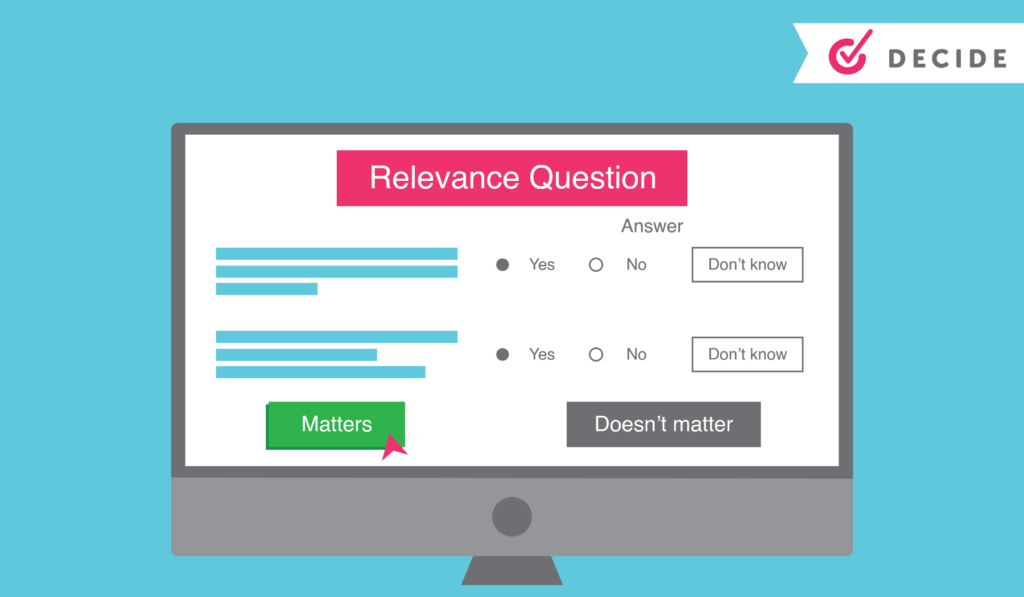
Sometimes the relevance questions stretch beyond your expertise as a Compliance leader. In those cases, use YouCompli to get the answer from colleague with the right expertise.
YouCompli tracks all of your relevance decisions over time, so you can see which regulations and changes applied to your organization and why (or why not!)
Once you know about a regulatory change and you’ve used YouCompli’s decision criteria to decide that a regulation applies to you, you’re ready to respond. YouCompli helps you manage the tasks necessary for compliance. And it helps you verify that your organization has put forth best efforts to stay in compliance.
Interested in how a healthcare system used YouCompli to decide which regulatory changes apply? Check out this case study from the Western Maryland Health System.

The OIG’s Beneficiary Inducement Final Rule is part of HHS Regulatory Sprint to Coordinated Care – Advancing the transition to value-based care.
Continue reading
Rules relaxed for arrangements directly connected to COVID-19. OIG considers intention of incentives under the beneficiary Inducement rules.
Continue reading
OCR’s HIPAA Right of Access Initiative drives investigations and enforcement settlements. Four settlement examples and remedies.
Continue reading
New rules from the Health and Human Services (HHS) department put stricter guardrails on how and when healthcare organizations provide access to PHI.
Continue reading
As a compliance officer, it’s time to go back through your compliance documentation over the past two years. How are you going to unwind from these changes
Continue readingFeatured speakers: Craig Bennett, Vice President and Chief Compliance Officer, Boston Medical Center; Rachel Lerner, Esq., General Counsel & Chief Compliance Officer, Director, Center for the Prevention of Elder Abuse and Neglect, Hebrew SeniorLife; Maria Palumbo, Chief Compliance & Privacy Officer, Lawrence General Hospital. Moderated by Larry Vernaglia
Bennett, Lerner and Palumbo addressed the Massachusetts Health and Hospital Association’s Healthcare Legal Compliance Forum in December 2021. (Read a summary.) This recap of their remarks looks at how their Compliance teams responded to COVID and have continued to partner with their organizations to manage regulatory change. It also looks at regulatory changes they are planning for in 2022. To access the full session recording, please contact the Massachusetts Health and Hospital Association.
The panel reflected on their organizations’ initial response to COVID. “All of us had to pivot on a dime,” said Bennett. “We hadn’t had an opportunity to plan for it. Instead, we worked daily that first quarter to make sure we were as compliant as we could possibly be.” He was part of a team that looked at various waivers, platform security, privacy and other issues affected by the public health emergency to provide care safely.
Lerner had a similar experience. “We immediately convened interdisciplinary committee so we could make changes quickly. Telehealth was really new territory for us, and we had to look at our outpatient medical practice, and home- and community-based care,” she said. “Tracking COVID 19 waivers was a team sport between Legal and Compliance. We broke down some silos, and that may be one good lasting benefit of this experience.”
Palumbo and her colleagues focused on creating templates and consistency for documentation to make things as straightforward as possible for clinicians. That included having them track their patient contact time in minutes rather than defaulting to 20-minute increments. “We’re auditing these processes now to be sure we’re prepared when it gets looked at externally.”
Palumbo illustrated how healthcare organizations had to respond to the specific needs of their communities. “Our population tends not to have computers or printers at home,” she said. It wasn’t enough to deliver COVID test results to the portal, because people needed printed results to return to work or school. Without a printer, they were stuck. “We were like the take-out line at a restaurant – we not only have to contract with the state to provide nine-lane testing, we also have a multiline drive up for picking up your covid test results because people need that hard paper.”
Bennett reflected on the tremendous amount of change and adaptation healthcare staff managed over the past two years. “I have to commend all hospital staff in being able to pivot and not missing a beat,” he said. His organization paused or reprioritized certain issues, but they maintained a focus on complying with regulations. That meant checking in with people regularly. That helped him assess whether people were getting the support and resources they needed related to their work. He expects to continue looking for ways to support staff. “We’ll continue to try to add flexibility to meet the needs of our staff and the needs of our patients and organization.”
Palumbo, too, is working to meet people where they are at. She recently “camped out in the cafeteria,” she said. “I couldn’t believe the results: About 350 people came to talk to me, including residents, physicians, surgeons, nurses, case managers, and housekeeping staff.” They asked about patient privacy and other compliance issues. “So much came up during COVID but we didn’t stop to work through everything or stop to talk to each other. I’ll try to do that at least once a quarter.”
Palumbo walked through some upcoming regulatory changes she’s watching. This included the Medicare Final Physician Fee Schedule and noted that the Appropriate Use Criteria changes are delayed until the January first that follows the end of the pandemic. She encouraged everyone to understand the documentation requirements for using nurse practitioners for some portion of care as well as the changes to billing for surgeon and ICU provider time.
New rules also allow audio-only telehealth visits for behavioral health as long as the patient wants it and the physician documents it properly.
Lerner continues to address privacy concerns related to COVID testing and contact tracing. “We were working so hard to limit the spread of the disease in our senior living facilities,” she said. “It was hard to navigate contact tracing and privacy.” Now she is addressing cybersecurity insurance requirements, for her own organization and making sure vendors have sufficient insurance. “Moving to remote workforces and telehealth, the cybersecurity exposure is higher than it’s ever been,” she said. “For instance, people working from home might want to print documents, but we have to keep them from printing PHI at home or mailing things insecurely when someone can’t come pick it up.”
Lerner said she spends a lot of time looking at regulatory changes to understand their implications to her organization. “It can take us a long time to decide ‘does this apply to us?’ And then figure out what to do with it. Then we have to figure out what to do with that information in bits and pieces. It is certainly a complex, ever-changing universe on that front.” She spoke of Compliance’s key role in knitting together all that information to help the organization act on it and integrate it into daily processes.
YouCompli sponsored MHA’s 2021 Healthcare Legal Compliance Forum. We provide a complete solution to help healthcare compliance organizations manage regulatory change. Find out more about YouCompli.


A good Compliance department doesn’t need to be huge with a lot of people and formal processes,” Callahan said. “A good department is one that has a real effect when they ask leadership to make a change.
Continue reading